
Healthy Ageing
Getting older is part of life. But how well we continue to move, think, recover and do the things we enjoy matters at every age. Researchers are exploring whether red and near-infrared light may have a role to play in supporting some of the processes involved in healthy ageing.
Healthy ageing isn't about staying young
There's a big difference between wanting to live longer and wanting to live well for longer.
You may have heard the term life span, which simply describes how long we live.
Researchers also talk about health span. That's the period of our lives when we remain healthy, active and able to do the things that matter to us.
For most of us, that's the part that really matters.
Being able to keep moving. Maintain our strength. Stay mentally engaged. Recover from activity. Look after ourselves. Travel. Spend time with family and friends. And continue doing the everyday things that make life enjoyable.
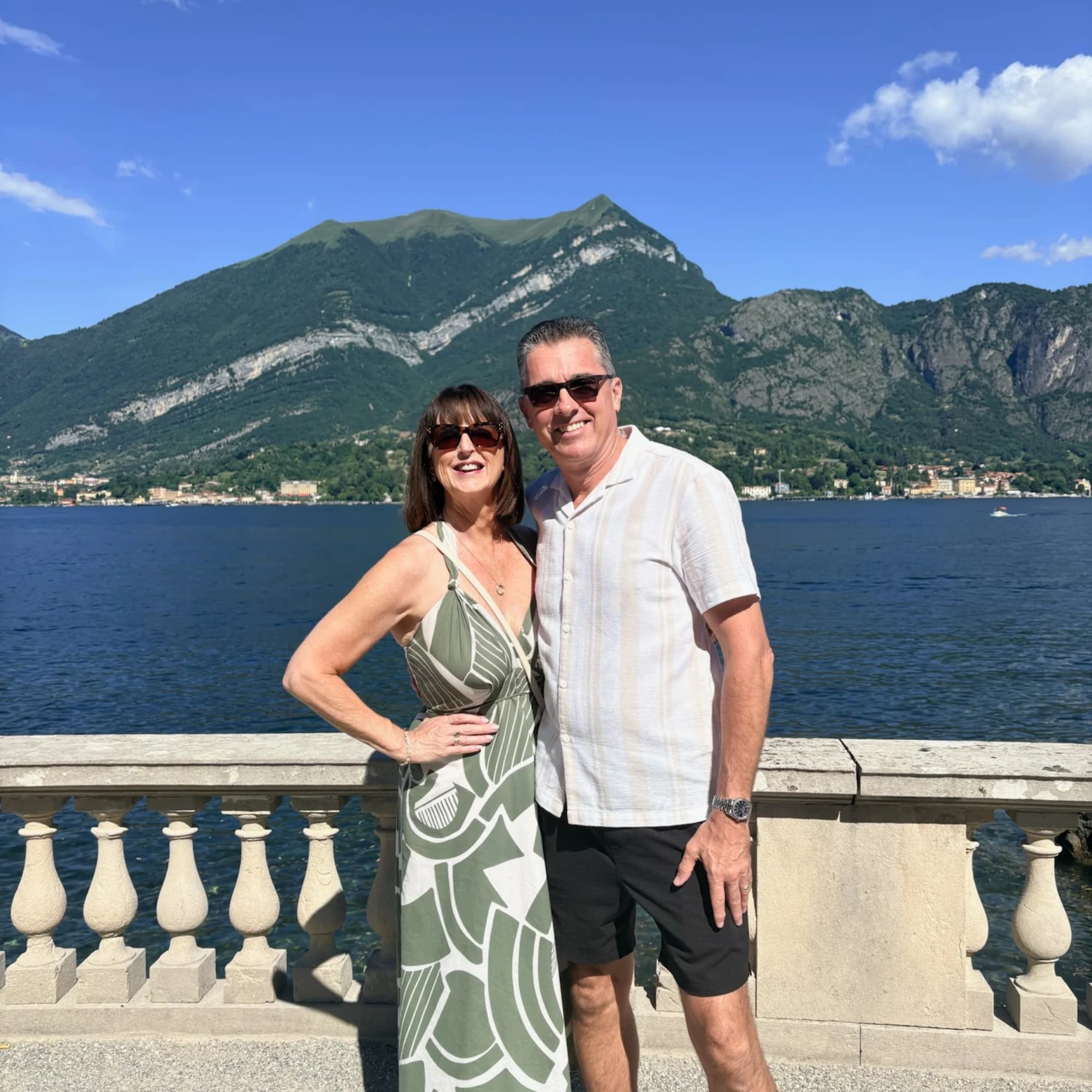
Healthy ageing isn't about trying to stay young. It's about staying able.
So, why are researchers interested in red light therapy and ageing?
As we get older, changes take place throughout the body, right down to the level of our cells.
One area researchers are particularly interested in is mitochondrial function.
Mitochondria are tiny structures inside our cells involved in producing the energy those cells need to function. And like many things in the body, the way our mitochondria function can change as we age.
Photobiomodulation is interesting because certain wavelengths of red and near-infrared light can be absorbed by cells and may influence processes involved in mitochondrial function and cellular energy.
That doesn't mean shining red light on the body somehow stops ageing.
It does help explain why researchers are investigating photobiomodulation across a surprisingly broad range of areas associated with ageing.
What is the research looking at?
The research into photobiomodulation and healthy ageing is still developing, and some areas have been studied much more than others.
Rather than thinking of red light therapy as an “anti ageing” treatment, we think it's more useful to look at the individual areas researchers are investigating.
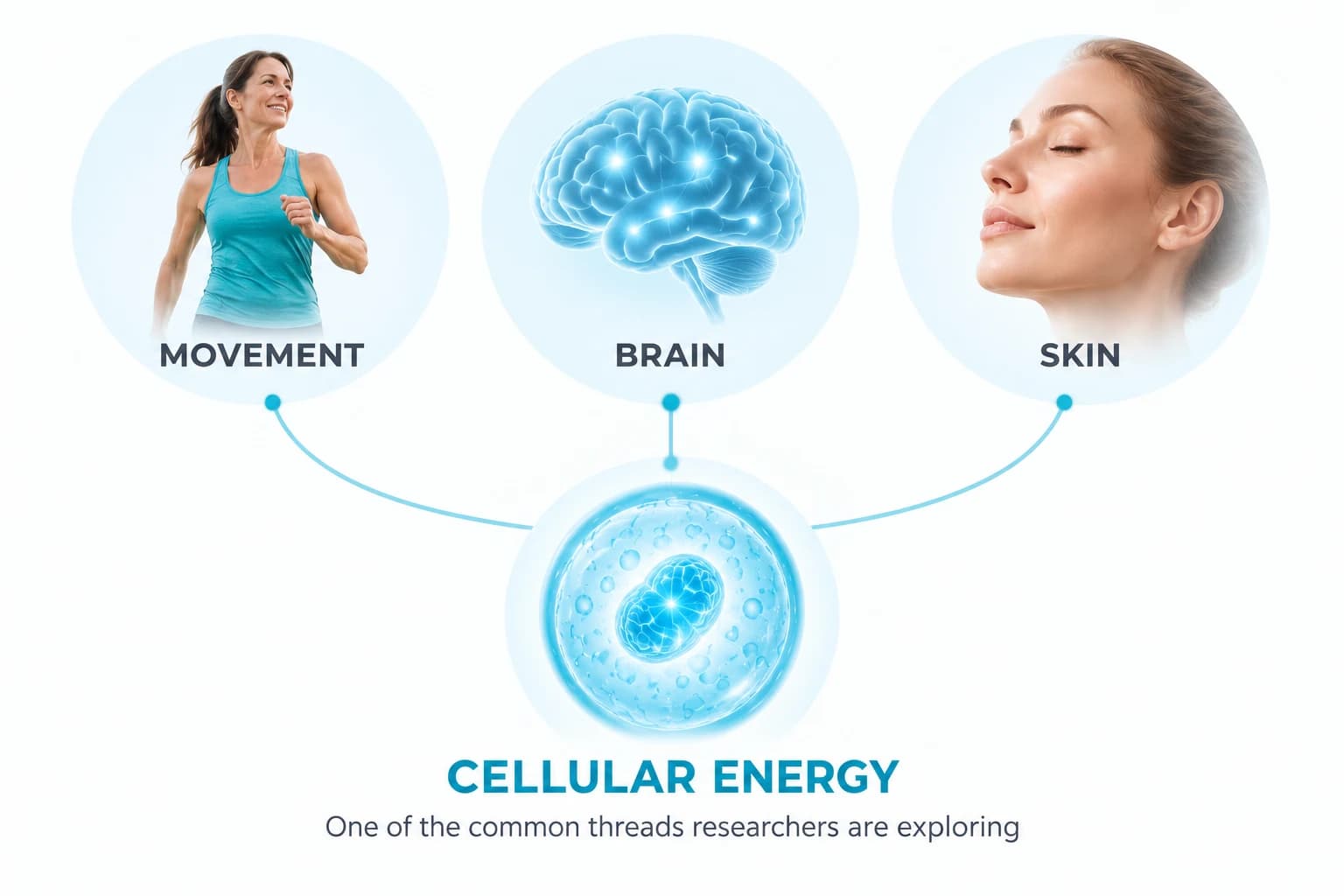
Movement & Physical Function
Staying physically capable becomes increasingly important as we get older.
Muscle strength, balance, mobility and physical function all contribute to our ability to remain active and independent.
Researchers have investigated photobiomodulation in older adults, including its use alongside exercise, to understand whether it may support aspects of muscle function, recovery and physical performance.
The findings are still developing, and PBM has not been shown to replace the benefits of exercise or strength training itself.
This also connects with the research we've explored around muscles and recovery.
Brain & Cognitive Function
Our brains have enormous energy requirements, which is one reason researchers are interested in the relationship between photobiomodulation, mitochondrial function and the brain.
Studies have investigated whether photobiomodulation may influence areas such as memory, attention, executive function and overall cognitive performance.
Some findings are encouraging, but this is still a developing field and there is much more to understand about who may benefit, how the light should be delivered and which treatment parameters are most effective.
Skin Health
Our skin changes as we age too.
Researchers have studied red light photobiomodulation in relation to skin ageing, including changes in the appearance of fine lines and wrinkles.
There is also laboratory and clinical interest in how photobiomodulation may influence processes involved in collagen production, cellular activity and skin repair.
The interest here isn't simply cosmetic.
Skin is an active organ that is constantly renewing itself. Understanding how light may interact with those natural processes is another area researchers are continuing to explore.
What connects all of this?
At first glance, muscles, the brain and skin might seem like three completely different areas of research.
But there's a common thread.
They're all made up of cells that need energy to do their jobs.
That's why mitochondria appear so often in conversations about photobiomodulation.
Researchers are investigating how light interacting with cells may influence cellular energy and other biological processes. Understanding those mechanisms may help explain why PBM is being studied across so many different tissues and areas of the body.
And ultimately, it comes back to something very simple: how well our cells continue to do their jobs as we get older.
Does red light therapy slow ageing?
We don't think the research allows us to say that.
Ageing is extraordinarily complex, and no single therapy, supplement or lifestyle change can stop it.
What makes photobiomodulation interesting is that researchers are investigating it in relation to a number of processes and functions that can change as we get older.
That's an important distinction.
We're interested in supporting healthy ageing, not promising to stop ageing.
The bigger picture still matters
Red light therapy is only one piece of a much bigger healthy ageing picture.
Movement and exercise matter. Maintaining muscle strength matters. Good nutrition and sleep matter. Staying socially connected and mentally engaged matters. And appropriate healthcare matters.
Photobiomodulation doesn't replace any of those things.
Instead, we're interested in where it might fit alongside them as researchers continue to learn more about light, cellular function and the ageing body.
More years are good. More good years are better.
Ultimately, healthy ageing isn't about a number on a birthday cake.
It's about having the physical and mental capacity to participate in your own life.
To move. Think. Explore. Connect. Learn. Travel. Laugh. Work. Rest. And keep doing as much of what matters to you as possible.
Because healthy ageing isn't just about how long we live. It's about how much living we're able to keep doing.
Want to explore the research?
We're following research into photobiomodulation and healthy ageing, including cellular function, physical function, cognition and skin health.
Want to understand the science behind the light?
If you'd like to understand more about wavelengths, mitochondria, cellular energy and what researchers think may happen when red and near-infrared light reaches the body, we've explained it without the jargon.