
Muscles & Recovery
Whether it’s exercise, physical work or simply an active day, our muscles are constantly working, adapting and recovering. Red and near-infrared light are being studied for the role they may play in supporting that process.
Our muscles do more than we realise
You don’t have to be an athlete to know what tired or sore muscles feel like.
It might be after a gym session, a long walk, a day in the garden, physical work, playing sport or simply doing more than your body is used to.
When we challenge our muscles, particularly through exercise or unfamiliar activity, we place temporary stress on the muscle tissue. The body responds with a series of natural processes involved in adaptation, repair and recovery.
And that recovery matters.
Because being active is one thing. Feeling ready to do it again is another.
Where does red light therapy come into it?
This is where photobiomodulation becomes interesting.
Certain wavelengths of red and near-infrared light can be absorbed by our cells, where they may influence processes involved in cellular energy and recovery.
Muscle tissue has high energy demands, particularly during and after physical activity, so researchers have been studying whether photobiomodulation can help support the way muscles respond to exercise and recover afterwards.
The research has looked at several different areas, including muscle soreness, fatigue, recovery of muscle function and physical performance.
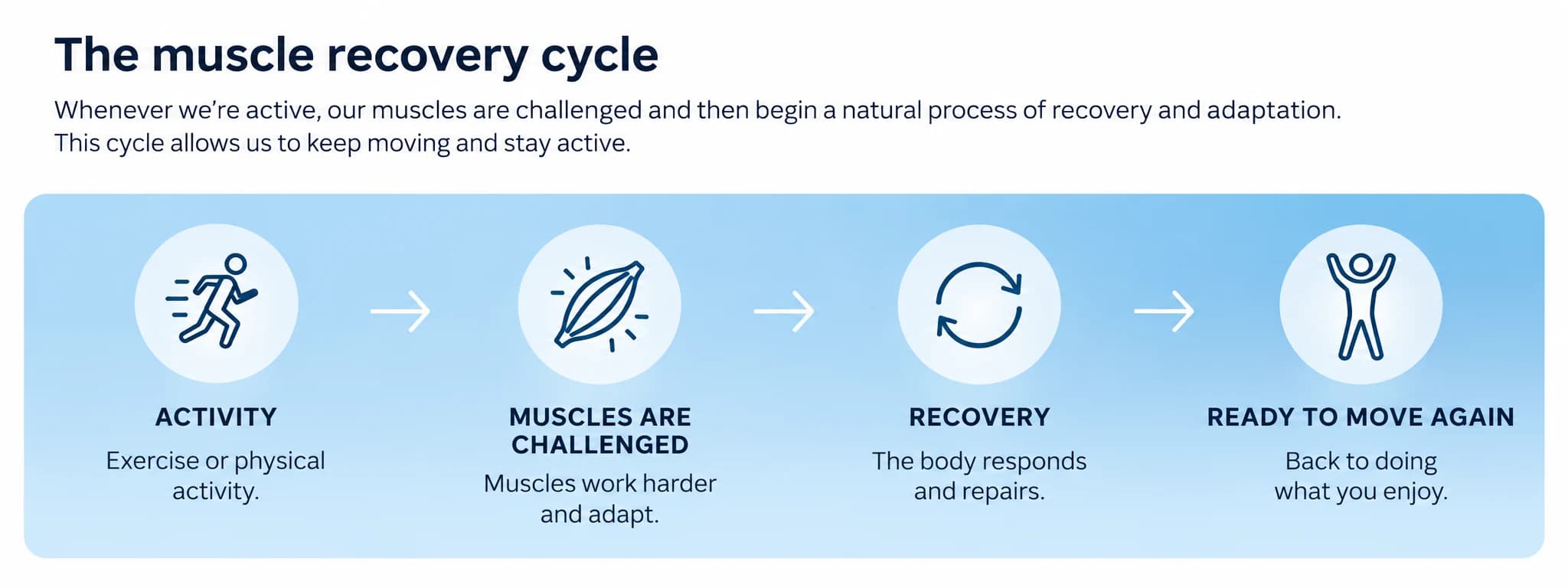
The muscle recovery cycle
Whenever we’re active, our muscles are challenged and then begin a natural process of recovery and adaptation. This cycle allows us to keep moving and stay active.
Activity
Exercise or physical activity.
Muscles are challenged
Muscles work harder and adapt.
Recovery
The body responds and repairs.
Ready to move again
Back to doing what you enjoy.
What is the research finding?
Research into photobiomodulation and muscles has produced some encouraging findings.
Studies have investigated red and near-infrared light both before and after physical activity, looking at whether it may support recovery, reduce muscle soreness or fatigue and help muscles regain function following demanding exercise.
Some research has reported improvements in muscle soreness and recovery of muscle strength. Other studies have found benefits in particular measures of muscular endurance and fatigue.
One particularly interesting part of the research is when the light is used.
Before exercise or after?
We tend to think about recovery as something that happens after activity.
But photobiomodulation research isn't limited to using light afterwards.
A number of studies have investigated applying red or near-infrared light before exercise, with some reporting benefits for subsequent muscle endurance, fatigue and recovery.
Photobiomodulation has also been studied after exercise, particularly in relation to muscle soreness and the recovery of muscle function.
This doesn't mean there's one perfect treatment schedule that applies to everyone. But it does suggest something interesting:
Supporting recovery may not necessarily begin after the activity is over.
What about sore muscles?
Anyone who has done an unfamiliar workout or suddenly become much more active than usual will probably recognise the soreness that can appear a day or two later.
This is often referred to as delayed onset muscle soreness, or DOMS.
Researchers have studied photobiomodulation in relation to exercise induced muscle soreness, with some studies reporting reductions in soreness and improvements in the recovery of muscle function.
Not every study has found the same effect, and results can vary depending on factors such as the dose of light, when it is applied, the type of exercise and what researchers are measuring.
But taken together, the research is one reason photobiomodulation has attracted considerable interest in the area of muscle recovery.
Recovery isn't only about sport
A lot of the language around muscle recovery can make it sound as though it only matters if you're training for an event or trying to improve your sporting performance.
But muscles don't know whether you're lifting weights in a gym or carrying bags of soil around the garden.
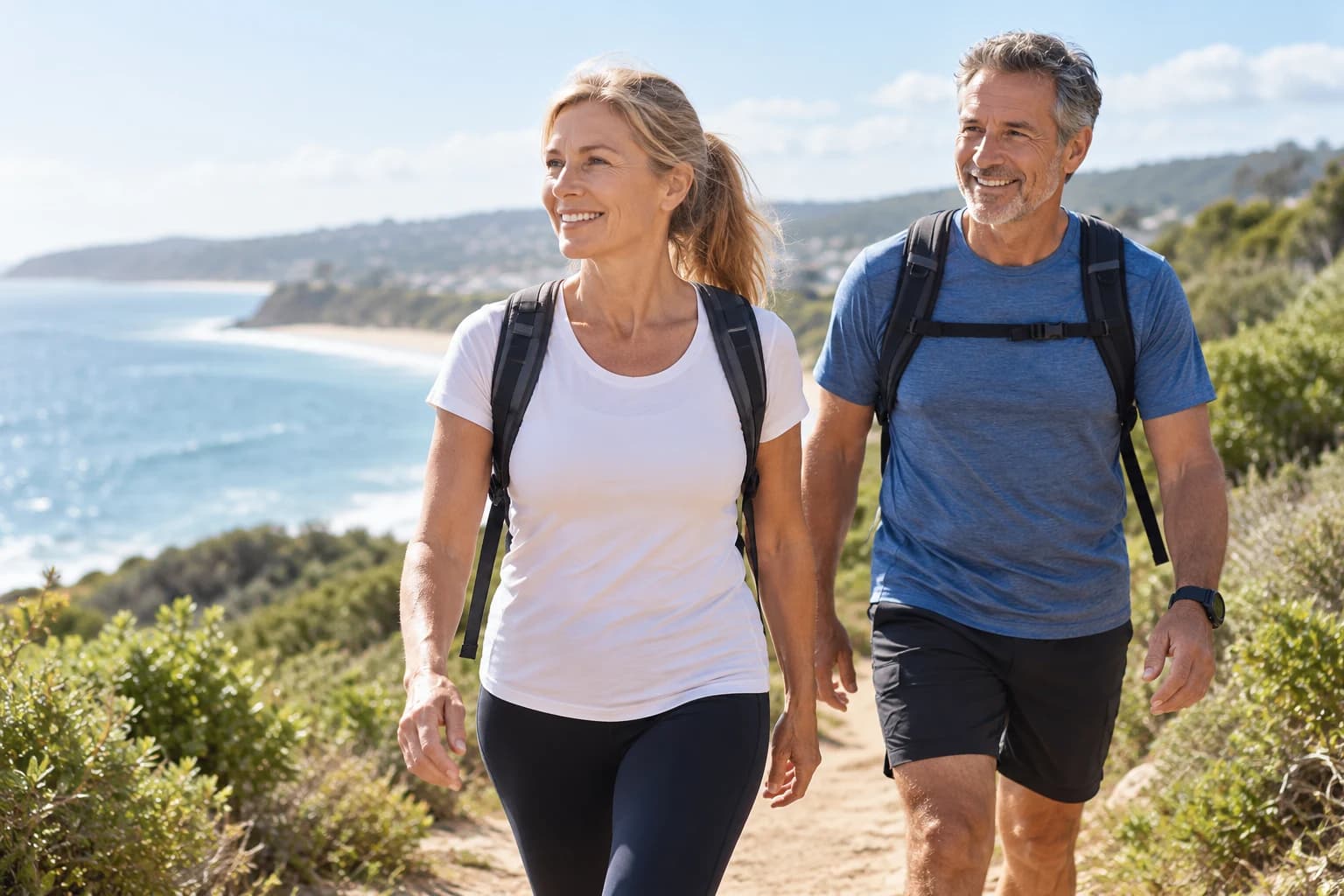
They respond to the work we ask them to do.
Recovery matters when you want to keep exercising. But it also matters when you want to stay active, keep doing physical work, enjoy your hobbies, travel, walk, garden or simply feel ready for whatever you're doing tomorrow.
You don't need to be an athlete to care about how well your body recovers.
Does that mean red light therapy makes you stronger or fitter?
Not on its own.
Strength and fitness come from using and challenging our bodies. Red light therapy doesn't replace exercise, movement or the work our muscles need to do to become stronger.
Where photobiomodulation becomes interesting is in what happens around that activity.
Researchers are investigating whether it can support aspects of muscle recovery, fatigue and function, potentially helping the body recover from the work we've asked it to do.
So rather than thinking of red light therapy as something that makes muscles stronger, it makes more sense to think about its potential role in supporting the recovery process that allows us to keep being active.
Supporting the body that keeps you moving
Muscle recovery isn't just about getting over a hard workout.
It's part of the cycle that allows us to move, recover and move again.
And as we get older, maintaining our strength, movement and ability to stay active becomes increasingly important.
That's why we're interested in this area of photobiomodulation research.
Not because everyone needs to perform like an athlete.
Because being able to recover from the things you enjoy doing can help you keep doing them.
Want to explore the research?
We follow research into photobiomodulation and muscle recovery, including studies investigating soreness, fatigue, muscle function and physical performance.
Want to understand what happens at a cellular level?
If you'd like to understand more about how red and near-infrared light interact with our cells, including the role of mitochondria and cellular energy, we've explained the science in plain English.