
Joints & Movement
Pain and stiffness can change how easily you move, how active you are and sometimes what you feel able to do at all.
When movement doesn’t feel as easy as it used to
Our joints are designed to move, but pain, stiffness, injury and the changes that come with getting older can sometimes make everyday movement more difficult.
You might notice it when you first get out of bed, stand after sitting for a while, climb stairs, bend down, go for a walk or try to get back to an activity you enjoy.
There are many reasons joints can become painful or stiff, and red light therapy isn’t a treatment for every cause.
The first thing to know is that photobiomodulation (PBM) is the scientific term commonly used for red and near-infrared light therapy.
Researchers have been investigating photobiomodulation in a range of conditions involving pain, joints and movement.
And that’s where things start to get interesting.
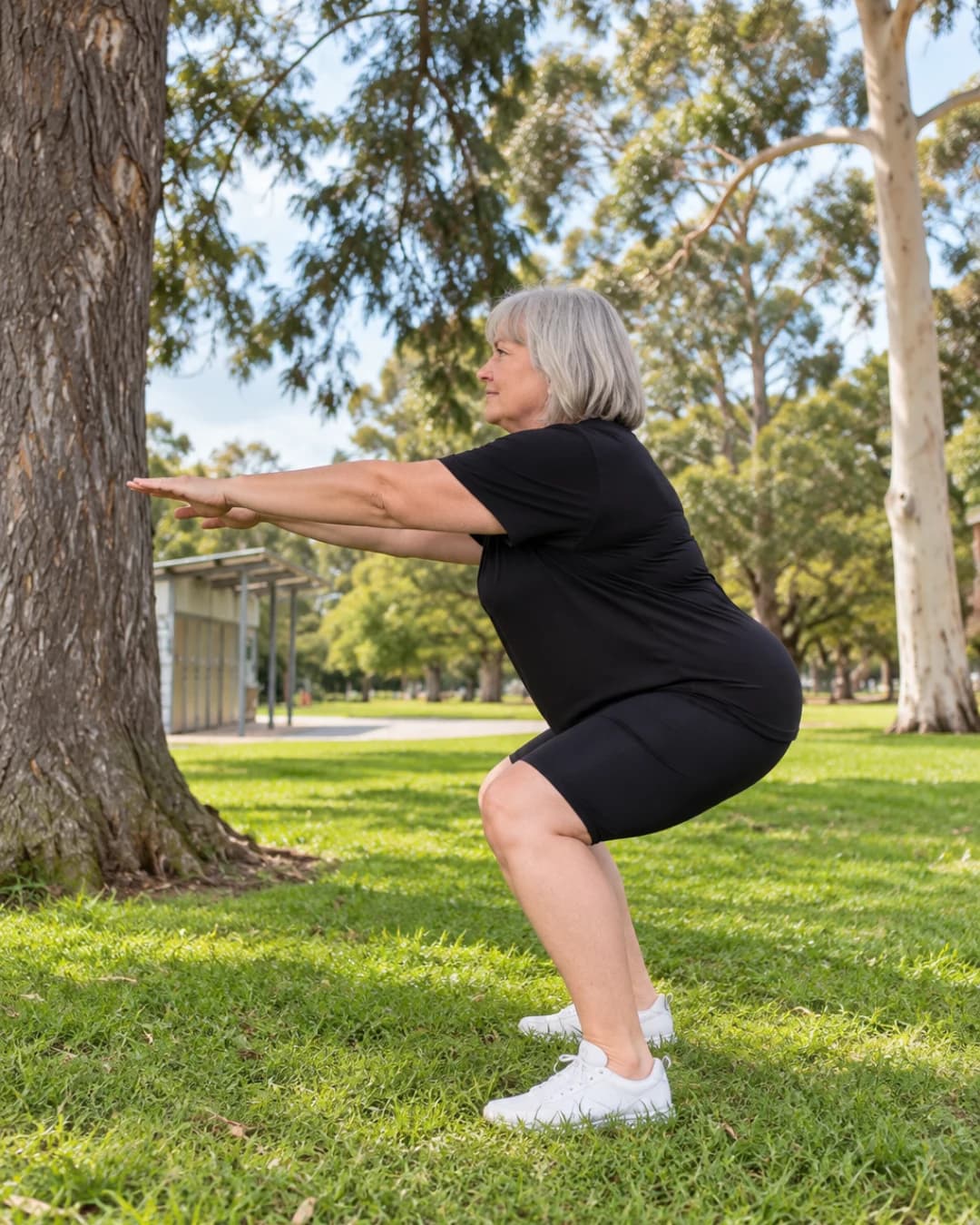
Because moving well isn’t just about exercise. It’s about being able to keep doing the things that are part of your life.
So, what could red light actually be doing?
It’s a reasonable question. How could shining red or near-infrared light on a sore knee, shoulder or back possibly make a difference?
That’s one of the questions researchers have been trying to answer.
We know that certain wavelengths of light can be absorbed by our cells. From there, researchers are looking at how that interaction may affect some of the processes involved in pain, inflammation and recovery.
You don’t need to understand all the cellular science to understand why this is interesting. Here are three areas particularly relevant to joints and movement.
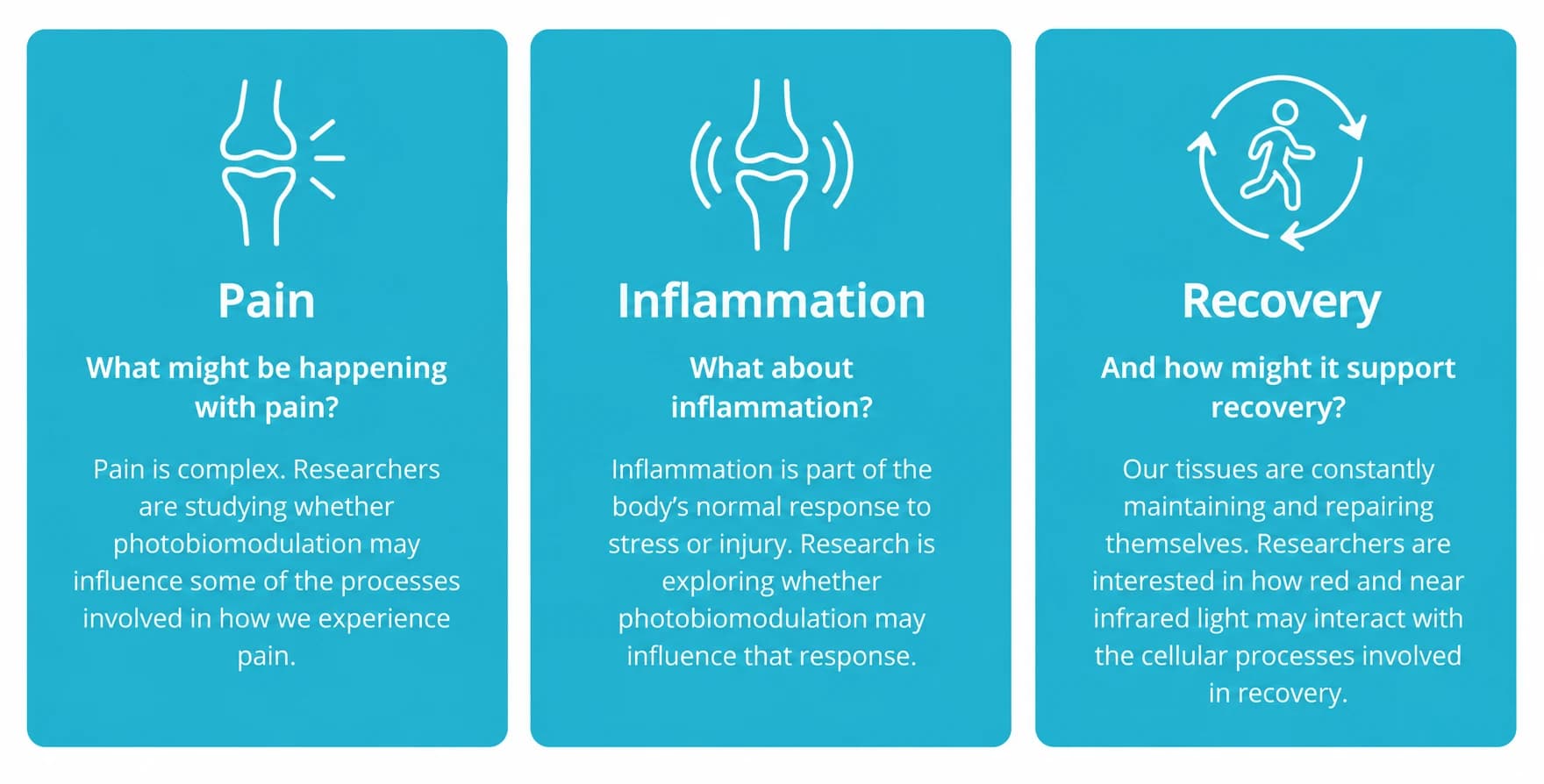
Pain
What might be happening with pain?
Pain is complex. Researchers are studying whether photobiomodulation may influence some of the processes involved in how we experience pain.
Inflammation
What about inflammation?
Inflammation is part of the body’s normal response to stress or injury. Research is exploring whether photobiomodulation may influence that response.
Recovery
And how might it support recovery?
Our tissues are constantly maintaining and repairing themselves. Researchers are interested in how red and near-infrared light may interact with the cellular processes involved in recovery.
Red light therapy isn’t physically moving a stiff joint or magically repairing damaged tissue. The interest is in what the light may be doing at a cellular level and whether that can ultimately make a meaningful difference to pain, function and movement.
What is the research looking at?
Photobiomodulation has been studied across a number of musculoskeletal conditions and different areas of the body.
But the research isn't equally strong for every condition. Some areas have encouraging findings, while in others the results are mixed or less convincing.
That's why we think it's important to look at what the research actually shows.
Knees & Osteoarthritis
Knee osteoarthritis can make things we normally take for granted more uncomfortable, like walking, climbing stairs or simply getting up from a chair.
Researchers have investigated photobiomodulation in people with knee osteoarthritis, looking at pain, stiffness and physical function. Some of the findings are encouraging, although the quality and certainty of the evidence varies.
Shoulders & Tendons
Shoulder and tendon problems can affect everything from getting dressed to reaching overhead or enjoying sport and exercise.
Photobiomodulation has been studied for a number of shoulder and tendon related conditions. Some research has reported improvements in pain and function, particularly when it has been used alongside exercise.
Neck Pain
A sore or stiff neck can make even simple movements uncomfortable.
Photobiomodulation has also been studied for neck pain. Some studies have reported improvements in pain, but the results across the research aren't consistent enough to suggest that everyone will experience the same benefit.
And what about lower back pain?
Lower back pain is a good example of why we don't like looking at one study in isolation.
Some earlier research into photobiomodulation reported improvements in lower back pain. But when researchers later brought together the results of multiple clinical trials, the overall findings were less convincing.
That doesn't mean research into photobiomodulation and lower back pain should be dismissed. It does mean the current evidence isn't strong enough for us to present it as a proven solution.
So, does the research say it works?
This is where we need to be careful.
There isn't one universal red light therapy treatment being tested in every study.
Researchers use different wavelengths, doses, treatment times and treatment schedules. They're also studying different conditions and different groups of people.
Not surprisingly, the results aren't identical.
Some studies have reported improvements in pain and physical function. Others have found smaller benefits or results that are less clear.
That's why we don't think it's helpful to take one positive study and simply say “red light therapy works.”
We'd rather look at the research as a whole, understand what was actually studied and explain what we know and what we don't in language that makes sense.
As new research emerges, we'll continue adding it to our Research Library.
Where does red light therapy fit?
We think of red light therapy as one possible tool in a much bigger picture.
Movement, appropriate exercise, maintaining strength, good sleep and nutrition can all play a part in looking after our joints and bodies. And sometimes pain or changes in movement need assessment and treatment from an appropriate health professional.
Red light therapy doesn’t replace any of those things.
What makes photobiomodulation interesting is that it doesn’t require you to physically load or exercise a sore area while you’re using it.
As the research develops, we’ll keep following it and sharing what we learn.
Keep moving. Keep doing what matters.
For most of us, staying mobile isn’t about running marathons or setting personal bests.
It’s being able to get out of a chair comfortably. Walk the dog. Work in the garden. Play with the grandchildren. Travel. Exercise. Or simply move through the day with more confidence.
That’s why we’re interested in the research around red light therapy and movement in the first place.
Because ultimately, it’s not just about how your joints feel. It’s about what feeling and moving better might allow you to keep doing.
Want to understand more about the science?
If you’re curious about wavelengths, photobiomodulation, mitochondria and what actually happens when red and near-infrared light reaches the body, we’ve broken the science down without the jargon.